Updated for the 2026/27 winter season/Size by height first and age second/Good sizes thin out fast once the forecast turns/Updated for the 2026/27 winter season/Size by height first and age second/Good sizes thin out fast once the forecast turns/
Most parents shopping for kids snow pants want the same three answers, fast: what size to buy, how warm the pants need to be, and whether snow bibs beat regular pants. You'll get all three here, before the first real snowfall, instead of scrolling a product grid and hoping the sizing sorts itself out.
The short version.
Size by height first and age second.
Match the waterproof rating to how your child actually plays, not to the biggest number on the tag.
And if your kid is under eight, or spends more of the afternoon sitting in the snow than standing in it, go with bibs.
Shop Kids Snow Pants & Bibs by Age and Size
Below: a size chart by age and height you can read right on this page, a plain-English breakdown of snow pants vs. ski pants, a feature checklist worth five minutes, and category picks for this season. Warm, durable winter clothing that survives sledding, gets washed a dozen times, and still ends up handed down to a younger sibling.
Good sizes thin out fast once the forecast turns. Stock and pricing on Amazon shift week to week in winter, so it's worth seeing today's number.
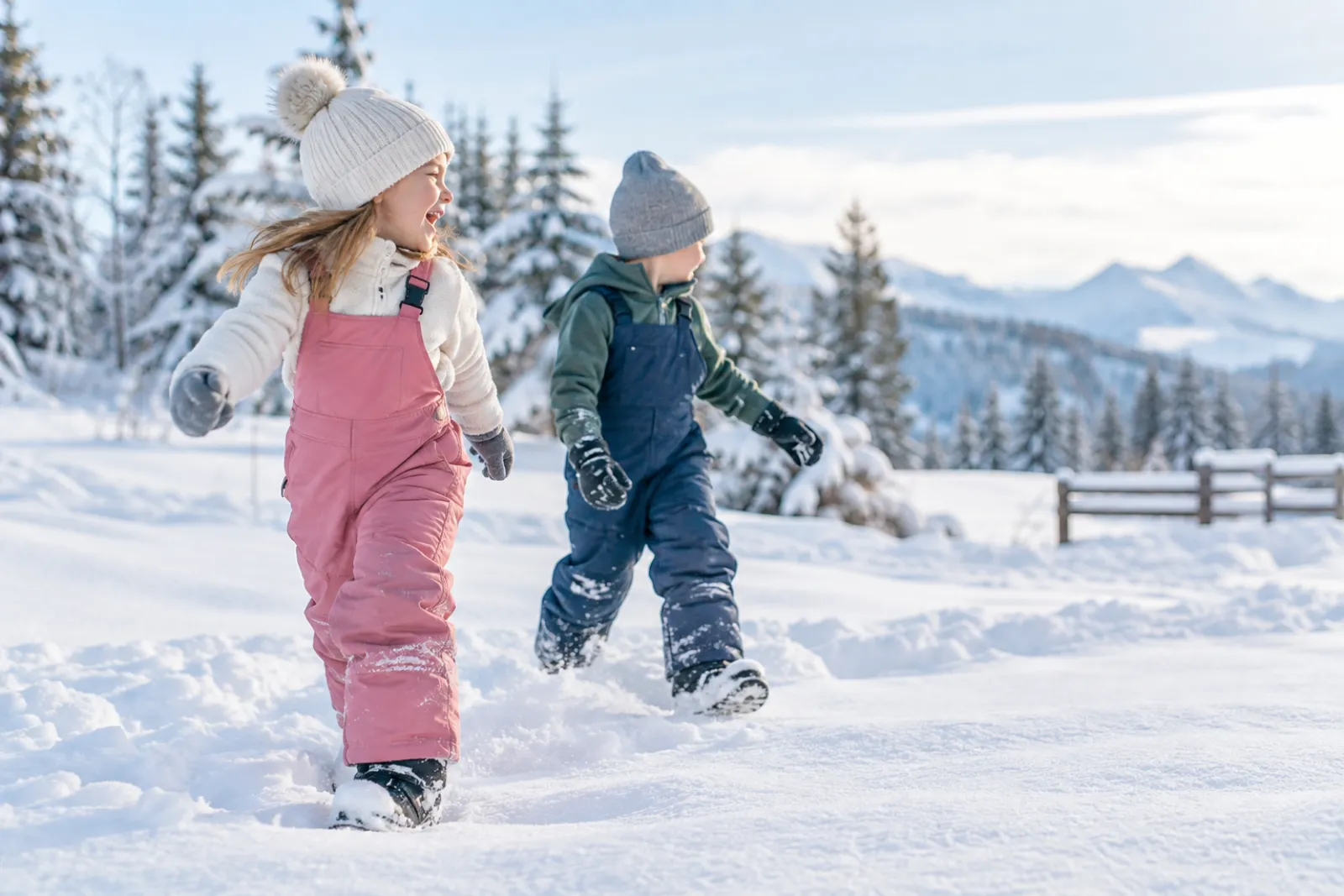
replace mehero-kids-snow-pants-bibs — two kids in bright snow bibs, fresh powder, winter light
Kids Snow Pants Benefits for Winter Play and Safety
Yes, kids need snow pants. Not as a nice-to-have, and not only for ski trips. A child in jeans or leggings is soaked through in roughly fifteen minutes of real snow play, and wet cotton against skin pulls heat away several times faster than dry fabric does. That's the whole problem in one sentence: the clothes fail before the kid gets tired.
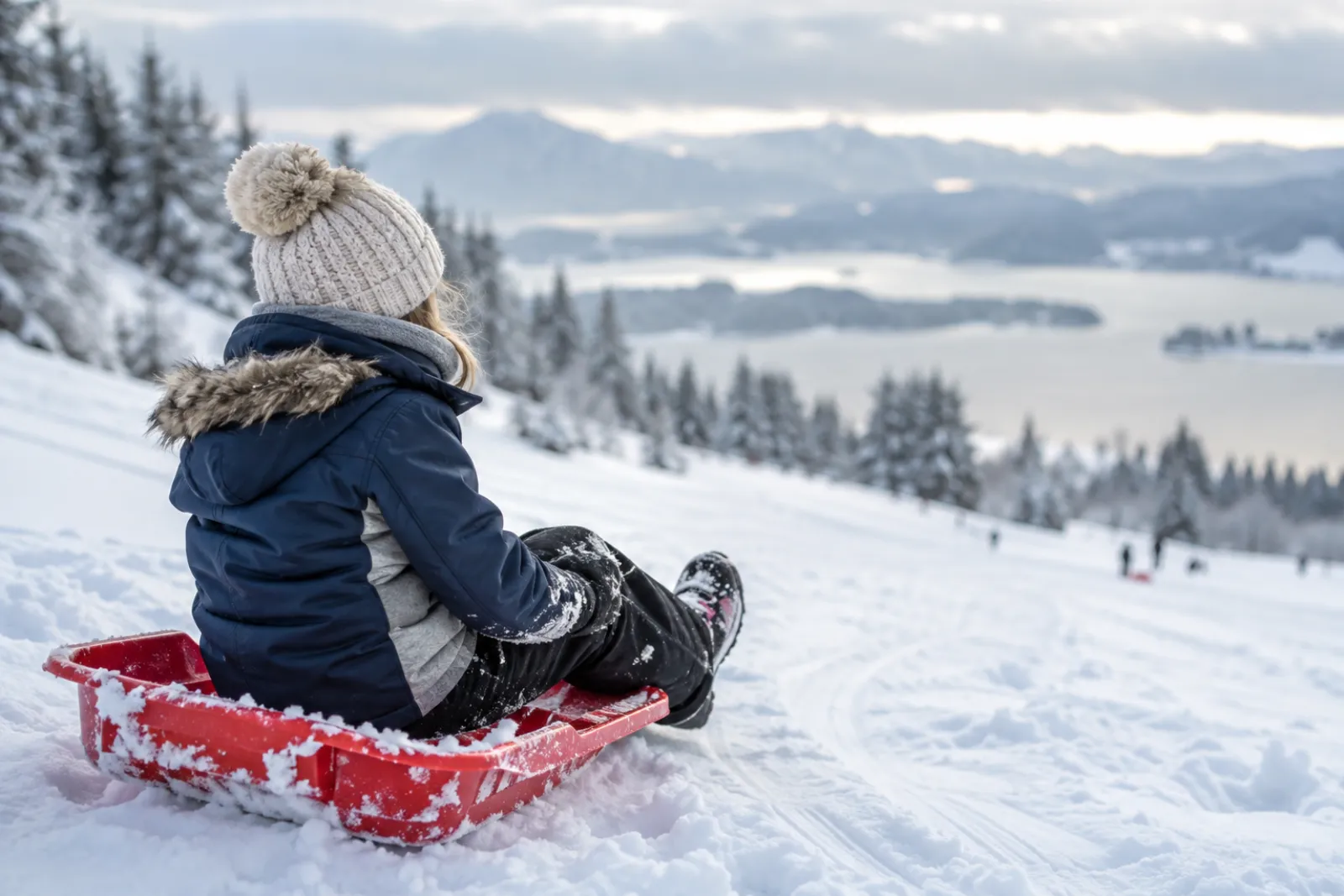
replace mekids-sledding-snow-pants — child on a red sled, snow on the seat and knees
Snow Pants for Sledding, Snowboarding, and Snow Play
Sledding is the hardest test any pair of kids' pants will face. Your child sits in wet snow, drags a plastic sled back uphill, then sits again. Repeat for two hours. Snowboarding is rougher still, because beginners spend most of their first season on their backside strapping in and falling. A dedicated snow pant handles both: the outer fabric sheds water instead of absorbing it, and the seat and knees are built to take abrasion.
Backyard play is gentler, but it's the longest exposure of all. Kids stay out far past the point where they'd tell you they're cold.
Warm, Dry Kids Protected from Wet and Cold
Warm and dry are two different jobs. Insulation traps body heat; the shell blocks wind and meltwater. Lose either one and the other stops mattering. Young children also lose heat faster than adults because of their body-surface ratio, so the margin for error is thinner than parents expect.
The payoff is simple. Kids who stay dry stay out longer, complain less, and don't get marched indoors twenty minutes into a snow day. That's why a decent pair earns its keep.
Snow Pants vs. Ski Pants: Key Differences for Kids
Nobody in the top search results explains this clearly, so here it is. "Snow pants" is the broad category — any waterproof outer trouser made for snow. "Ski pants" is a subset: the same garment tuned for a lift-served day on the mountain. Every pair of ski pants is a pair of snow pants. The reverse isn't true.
Ski Pants for Kids: Technical Fit and Features
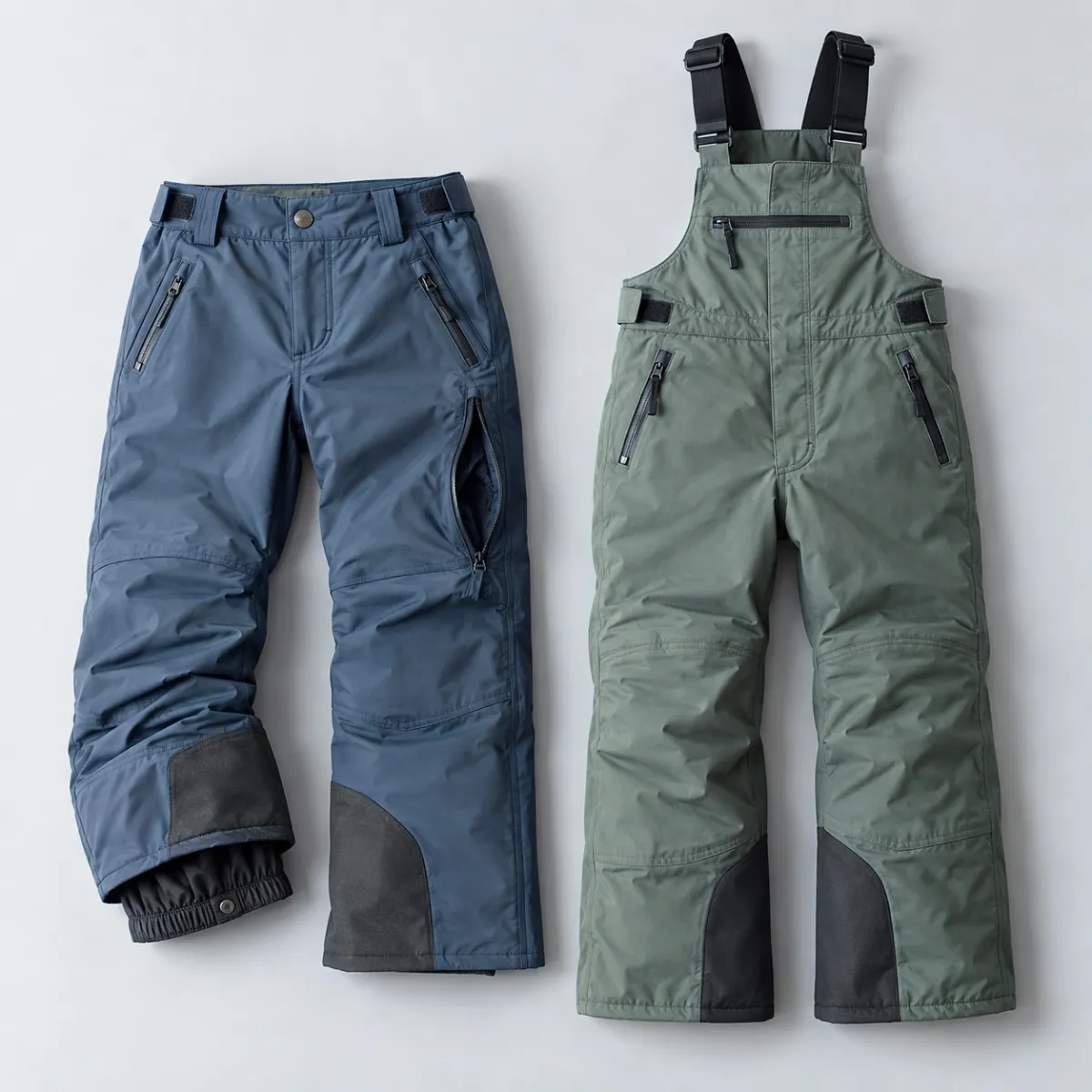
Ski pants for kids carry features you only miss on a real mountain day. Inner boot gaiters with a grippy elastic cuff that seals around the ski boot. A slimmer, articulated cut so fabric doesn't bunch inside the boot. Zippered thigh vents for the warm sunny laps. Higher waterproof ratings and taped seams, because chairlift seats are wet and you sit on them forty times a day. A scuff guard on the inner ankle where edges catch.
General snow pants skip some of that and cost less for it. For sledding, recess and the backyard, you genuinely don't need boot gaiters. For a week at a resort, you will.
replace mesnow-pants-vs-ski-pants — flat-lay: ski pants left, snow bibs right
Snow Bibs vs. Snow Pants: Which Style Fits Best
Bibs are essentially insulated overalls: a high chest panel held up by adjustable shoulder straps. Pants stop at the waist and rely on an elastic or adjustable waistband.
Bibs win for younger kids, hands down. No gap at the lower back when they bend over to pack a snowball, nothing to tug down, and no waistband digging in under a jacket. Pants win on convenience once a child handles their own bathroom breaks and wants to shed a layer without taking the jacket off first. Some brands split the difference with a suspender pant — a waist-height pant with removable braces. Obermeyer's Frosty suspender style is a well-known example of that middle ground.
Expert tip:
If your child is still in the "I need to go RIGHT NOW" stage, look for a bib with a drop seat or a long two-way side zip. It's the single feature parents thank themselves for in February.
How to Choose Kids Snow Pants: Fit, Waterproofing & Room-to-Grow
Five minutes with this checklist saves you a mid-season re-buy. Work through it in order — fit first, because the warmest pant in the world is useless if it's outgrown by January.
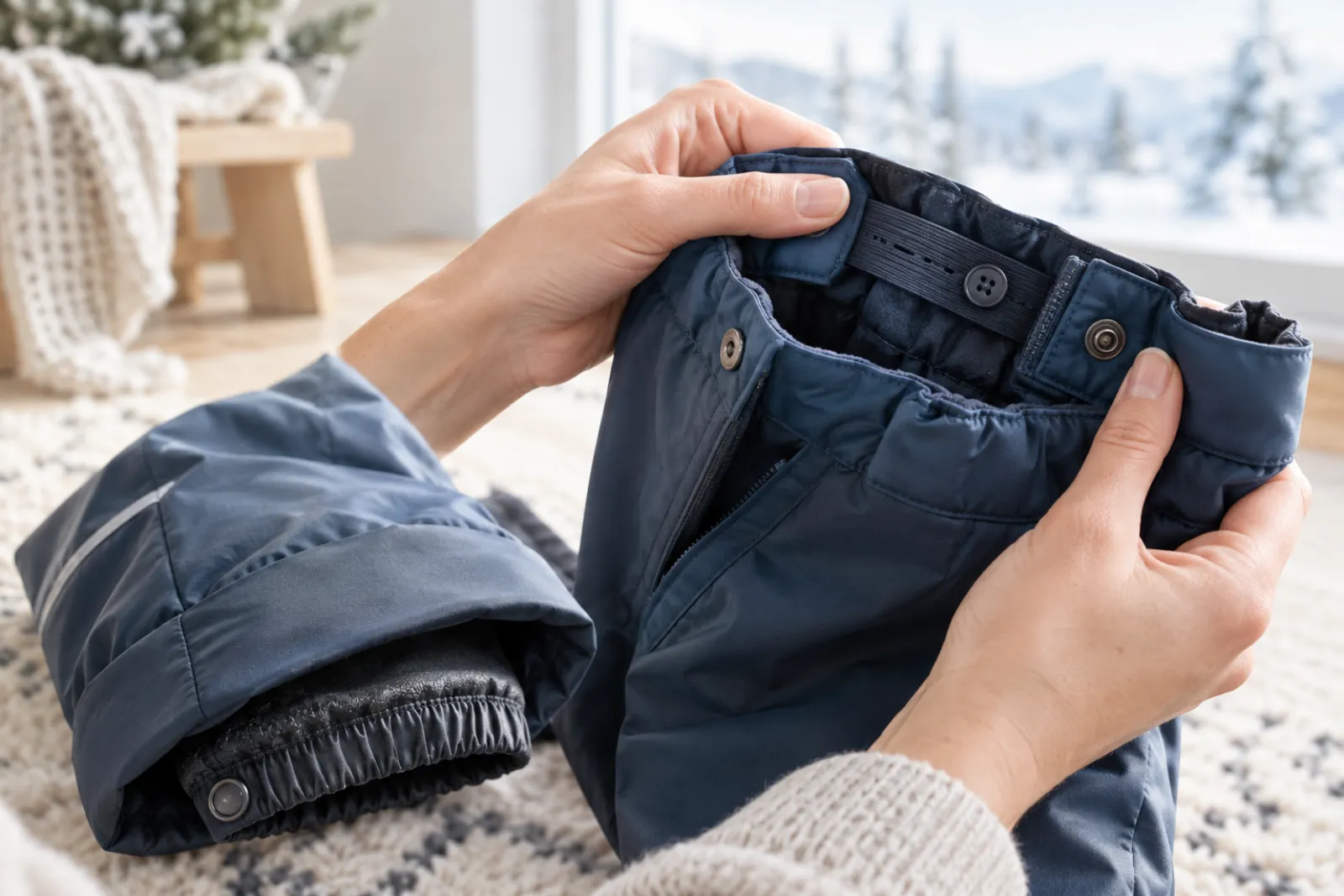
replace meroom-to-grow-adjustable-waistband — macro of the waistband tab & growth hem
01
Room-to-Grow and Adjustable Waistband Fit
Room-to-grow is the feature no competitor bothers to explain, and it's the one that decides whether you buy again next winter. It means the garment is built with hidden extra length, usually a folded hem cuff or a lengthening seam inside the leg, that you let out as your child grows. Reima builds this into its kids' range; Obermeyer calls its version the I-Grow Extended Wear System. Typical gain is one to two inches of inseam, which is roughly one extra season.
The waistband matters just as much. Look for internal elastic tabs with a button ladder on both hips, not a single drawcord. Tabs let you cinch a size up so it actually fits this year, then release it next year.
Buying a size up without room-to-grow hardware is a bad trade. Excess fabric bunches at the ankle, catches under boots, and drags in the snow. Sized-up plus adjustable is fine. Sized-up alone is a tripping hazard.
02
Waterproof Rating and Insulation Levels
Waterproofing is measured in millimetres of water column. As a working guide for children's outerwear: around 5,000mm handles light backyard snow and the school run; 10,000mm is the sweet spot for most families and covers sledding and wet spring snow; 15,000–20,000mm is resort-grade and worth it for kids who ski or snowboard regularly. Obermeyer filters its kids' range by a 10K rating, which tells you where the category centre of gravity sits.
Taped seams matter more than the headline number. An untaped 10K pant leaks at the stitching long before the fabric gives up.
Insulation is measured in grams. Roughly 60g is light and best for active skiing, 80–100g suits most snow days, and 120–150g is for genuinely cold climates or kids who sit still. Shell-only pants, with no insulation, work well layered over fleece or a wool base layer for older kids who run hot.
03
Bib vs. Pants: Coverage and Convenience
The rule of thumb: bibs for under-eights and for sitters, waist pants for older kids and easy layering, suspender pants if you want both. Coverage decides it. If you keep finding snow down the back of their trousers, you've answered your own question.
04
Venting, Breathability, and Durable Fabric
Kids sweat hard, then chill when they stop. Breathable fabric moves that moisture out; thigh vents let you dump heat instantly. Both are worth having in anything used for skiing or snowboarding.
For durability, check the denier of the face fabric if it's listed, and check where the reinforcement sits. A tough nylon or polyester shell with a reinforced seat and knee panel will outlast a smooth, thin fabric by seasons. Town Hall Outdoor Co built its whole brand story around gear tough enough to hand down, and it sells repair patches to back it up — a decent signal of what "durable" should mean in this category.
Run that checklist against the picks below, then check the current price on the pair that fits your list.
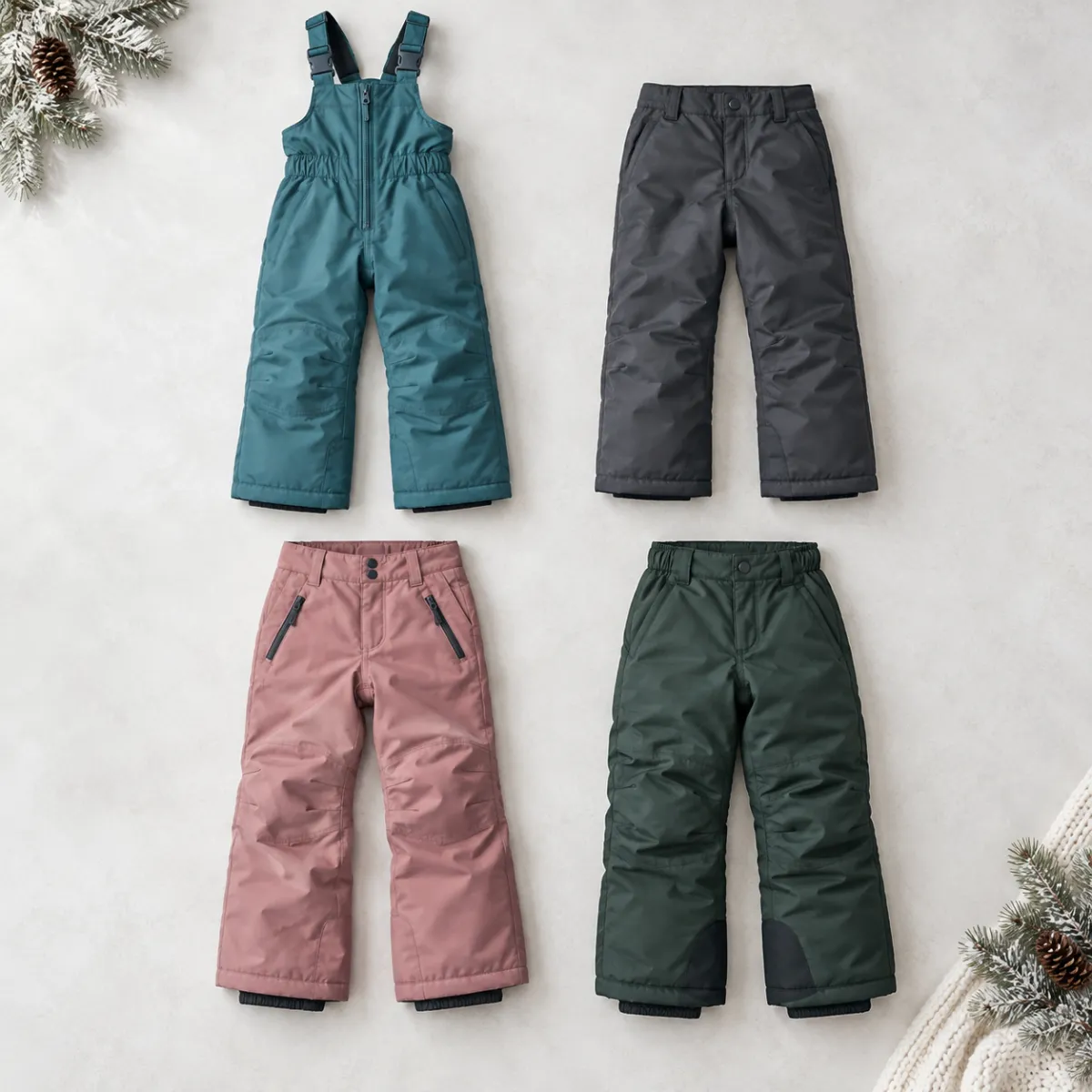
There's no single best pair for every child, so treat these as four categories rather than one winner. Match your kid's play style to the category, then compare specifics on the product page.
replace mebest-kids-snow-pants-picks — overhead grid of four kids' winter pieces
Top Kids Snow Bibs for Room-to-Grow Fit
What to look for: a high chest panel, adjustable shoulder straps, a growth hem, and a full-length or two-way side zip. Reima and Obermeyer are the two names that consistently build extendable sizing into kids' bibs, and both have decades in children's and ski outerwear specifically. Lands' End and L.L.Bean sit in the same space with a more classic cut and generous return policies.
Best for: ages two through eight, and any child who ends the afternoon sitting in a snowbank.
Budget doesn't have to mean disposable. In the value segment, prioritise a genuine waterproof membrane and an adjustable waistband over extras like vents and gaiters. Columbia is the reliable pick here and is carried by nearly every specialty retailer in the results above. A simple insulated pant with a 5K–10K rating and taped seams covers 90% of what a school-age child does in snow.
What to skip at this level: fashion prints that push the price up without adding waterproofing, and anything that lists no rating at all.
Here the technical features earn their money. Look for boot gaiters, a higher waterproof rating, thigh vents, and a reinforced inner ankle. Burton Snowboards and The North Face both build proper youth snowboard pants with a relaxed, board-friendly cut; Spyder, Helly Hansen and 686 cover the ski side with a more tailored shape. A snowboard-specific fit is roomier through the seat and thigh on purpose, which also makes it a better sledding pant.
Best for: kids in lessons, season-pass families, and anyone doing multiple resort days a winter.
For deep cold, look at 120g insulation and up, a fleece-lined waist and cuffs, and a full snow gaiter at the ankle. A one-piece ski suit is the warmest option of all for toddlers, because there's no waist seam for cold air to find. Obermeyer's Quinn one-piece is a familiar example of that style.
Pair any of these with a wool base layer rather than cotton, and the same pant will handle a twenty-degree swing in temperature.
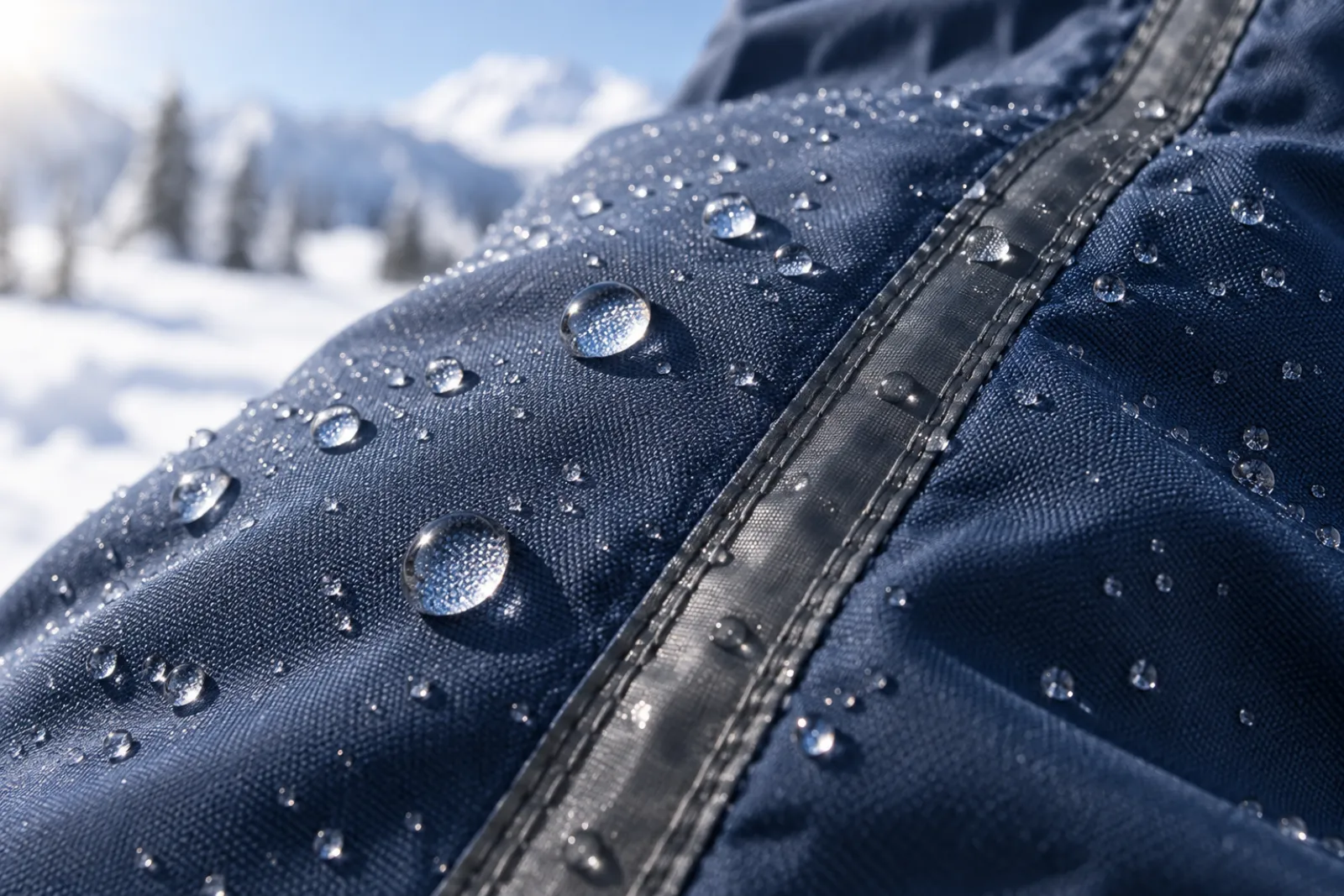
None of the top-ranking shops put warmth and waterproofing side by side, so here's the comparison in one table. Use it to narrow to a category before you open a single product page.
replace mewaterproof-rating-comparison — macro, water beading on nylon face fabric
Kids snow pants comparison by waterproof rating, insulation, durability and price segment
Ratings above are the typical ranges for each category, not a guarantee for a specific model — always confirm the spec on the listing. Once you've picked a row, the current price and size availability are one click away.
Kids Snow Pants Size Chart by Age and Height
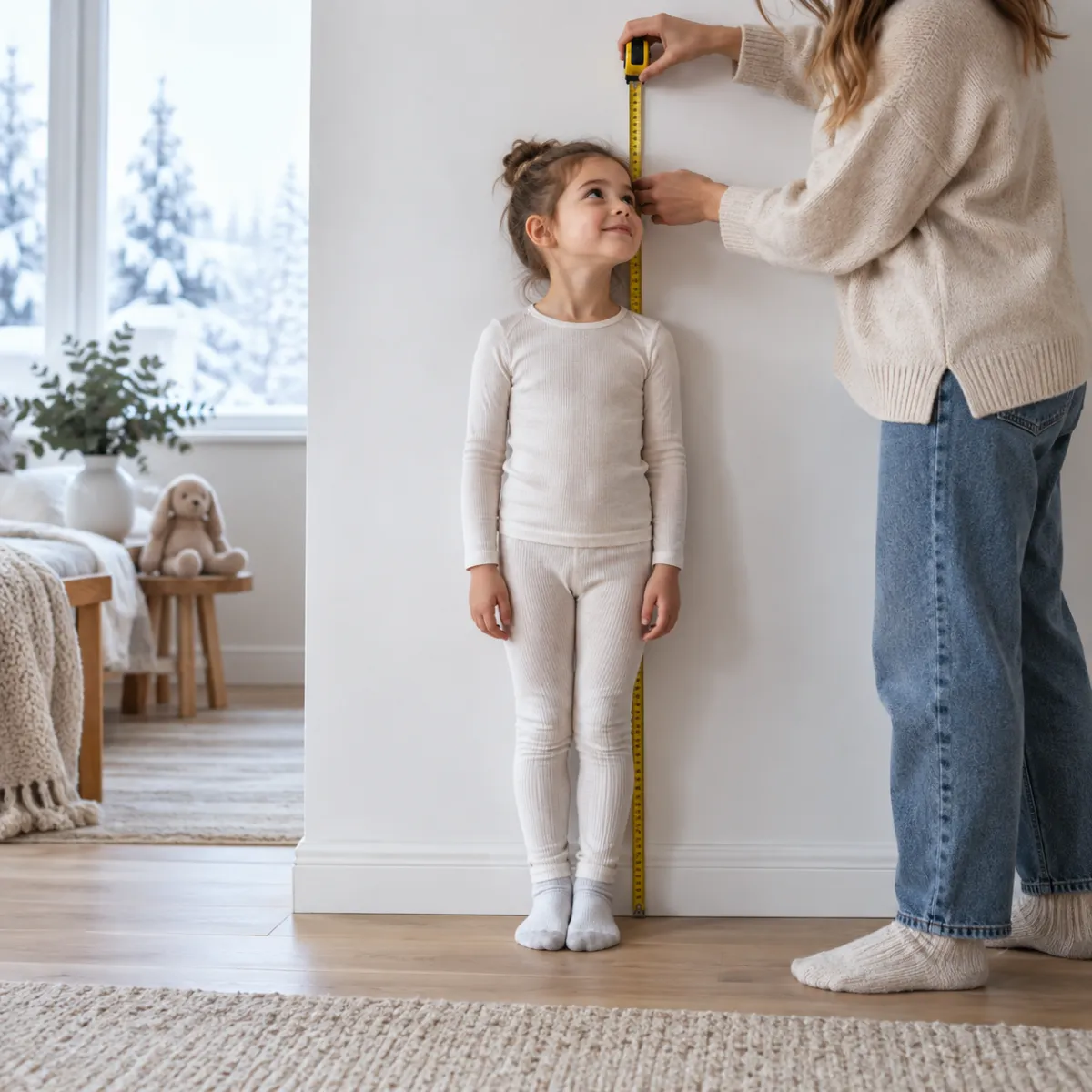
Every competing shop links you away to a separate fit guide. Here's the chart on the page instead. Measure your child's height in socks against a wall, and use age only as a sanity check. Kids of the same age vary by several inches, and height is what the garment is actually cut to.
replace mekids-snow-pants-size-chart — parent measuring a child against a wall
Suggested size 5–6· Bib still the easier choice
Kids snow pants size chart by age and height
Size
Age (guide)
Height
Notes
2T
2 years
33–35 in / 84–89 cm
Bib strongly preferred
3T
3 years
36–38 in / 91–97 cm
Look for drop seat or long side zip
4T / 4
4 years
39–41 in / 99–104 cm
Growth hem starts to pay off
5–6
5–6 years
42–47 in / 107–119 cm
Bib still the easier choice
7–8
7–8 years
48–52 in / 122–132 cm
Transition point to waist pants
10–12
9–11 years
53–58 in / 135–147 cm
Adjustable waist tabs essential
14–16
12–14 years
59–64 in / 150–163 cm
Check inseam, not just size label
Toddler and Preschool Snow Pants Sizing
Under five, size true to height and use the growth hem for next winter rather than buying two sizes up now. A toddler swimming in fabric can't walk in snow boots, and that ends the outing faster than cold does. Check the leg opening too: it has to fit over a bulky winter boot without a fight.
Youth and Big Kid Snow Pants Sizing
From about seven upward, inseam becomes the number that matters, because kids grow in the legs first. A pant that's correct at the waist and short at the ankle lets snow in at exactly the wrong spot. If your child sits between two sizes, take the larger one and cinch the internal waist tabs.
Expert tip:
Measure over a base layer, not in pyjamas. That extra quarter-inch is why a pant that fit in the shop feels tight on the hill.
Found your size? Sizes sell through unevenly, so check availability in that size today.
Durability in kids' outerwear isn't about surviving one winter. It's about surviving one winter, a wash cycle every week, and then a second child. These are the design and construction details that decide which side of that line a pant lands on.
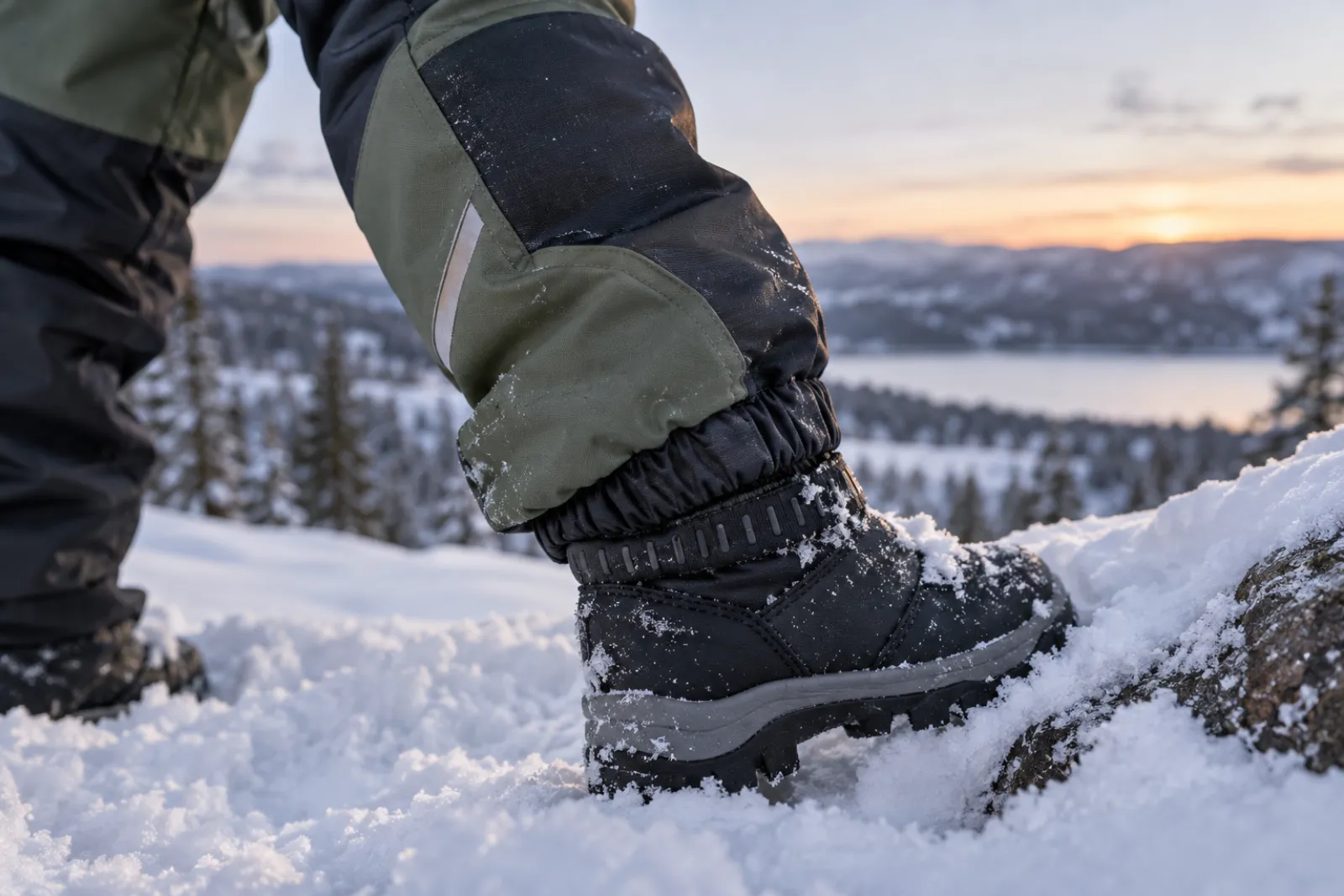
replace mereinforced-knees-snow-cuffs — knee panel, snow cuff sealing over a boot
Reinforced Knees and Seat for Sledding Wear
Look for a second layer of heavier fabric panelled across the seat and both knees — visible as a distinct panel, not just a marketing bullet. That's where sledding, kneeling and snowboard-strapping wear happens, and it's where cheap pants blow out first. Articulated knees, with a curved seam, also stop the fabric straining at the same point every time your child crouches.
Seam construction matters equally. Fully taped seams keep water out; critically-taped means only the main seams are sealed, which is fine for a value pant but not for a resort pant.
Reflective Details and Snow Cuffs for Visibility
Winter afternoons go dark early, and sledding hills are rarely lit. Reflective piping or a logo print on the lower leg costs the maker almost nothing and makes a real difference at pickup time in the dark.
Inside the ankle, the snow cuff is the piece most parents overlook. It's an elastic inner gaiter with a grippy silicone band that seals over the boot so powder can't travel up the leg. A hook-and-loop tab at the outer hem lets you tighten the opening around chunkier boots. Boot gaiters, reinforced hems and a reflective detail together are the difference between a pant that lasts a season and one that lasts three.
Watch: how to size and fit kids' snow gear
replace mevideo preview — thumbnail is supplied with the embed
Kids Snow Pants FAQ
What are the best snow pants for kids?
The best pair is the one matched to how your child plays. General snow play and sledding: an insulated bib, 10K rating, growth hem. Skiing or snowboarding: a technical pant with boot gaiters and vents. Tight budget: a simple insulated pant with taped seams beats a fancier pant with none. Compare the four categories above, then check the current price.
Do kids need snow pants?
Beyond a few minutes outside, yes. Regular trousers soak through quickly, and wet fabric pulls heat from a child far faster than dry fabric does. Snow pants keep kids warm, dry and outside longer.
What's the difference between snow pants and ski pants?
Snow pants is the umbrella term for waterproof snow trousers. Ski pants are the technical version: boot gaiters, higher ratings, thigh vents, taped seams, a slimmer cut. Ski pants for kids cost more and earn it only if your child actually skis or snowboards.
What brand has the best snow pants for kids?
Brands own different lanes. Reima and Obermeyer lead on growth-adjustable kids' sizing, Burton and The North Face on snowboard-ready fits, Columbia on value, L.L.Bean and Lands' End on classic cuts with generous returns, Helly Hansen and Spyder on technical ski pants. Pick the lane, then the brand.
What types of kids' snow pants should I consider?
Four styles: bibs (maximum coverage), waist pants (easiest to layer), suspender pants (waist pant with removable braces) and one-piece snow suits (warmest, best for toddlers). Insulated versus shell-only is the second decision, driven by your climate.
What features are important in kids' snow pants?
In order: waterproof rating with taped seams, adjustable waist, room-to-grow hem, reinforced seat and knees, snow cuffs at the ankle, vents, reflective detailing. Insulation weight sits alongside those, matched to your winter rather than maximised.
What is Room-to-Grow in kids' snow pants?
Hidden length built into the leg, usually a folded hem you release as your child grows, worth one to two inches. Combined with adjustable waist tabs it buys roughly an extra season. Brands name it differently, such as Obermeyer's I-Grow system, but the idea is identical.
Where can I buy kids' snow pants?
Specialty ski retailers, brand sites and Amazon all carry the major labels. Amazon usually has the widest size and colour availability in one place, plus verified buyer reviews, which helps when you can't try before you buy.
How do I choose the right snow pants size for my child?
Measure height first, compare against the chart above, and use age as a cross-check only. Measure over a base layer. Between two sizes, take the larger and cinch the internal waist tabs.
Are snow bibs warmer than snow pants for kids?
Generally yes. The chest panel covers the lower back and torso and closes the waist gap where cold air gets in. Same insulation weight, warmer result, most noticeable for younger kids who sit in the snow.
Still deciding between two options? Comparing both on price and available sizes usually settles it in a minute.
Kids snow pants follow a predictable pattern: the best sizes and the most popular colours go first, and restocks mid-season are hit or miss. Buy in autumn and you choose from the full range. Buy in January and you take what's left.
You now have the size chart, the feature checklist, and the four categories that cover almost every child. Pick the category that matches your kid, confirm the size against height, and check today's price and availability.
As an Amazon Associate, we earn from qualifying purchases. Prices and availability on Amazon change frequently and are accurate only as shown on the product page at the time of purchase.